You've memorised a handful of pieces and they sound good. But the moment the learned notes run out — a friend wants it lower, someone says "just play something" — you freeze. This is the workbook that teaches you the instrument underneath the songs.
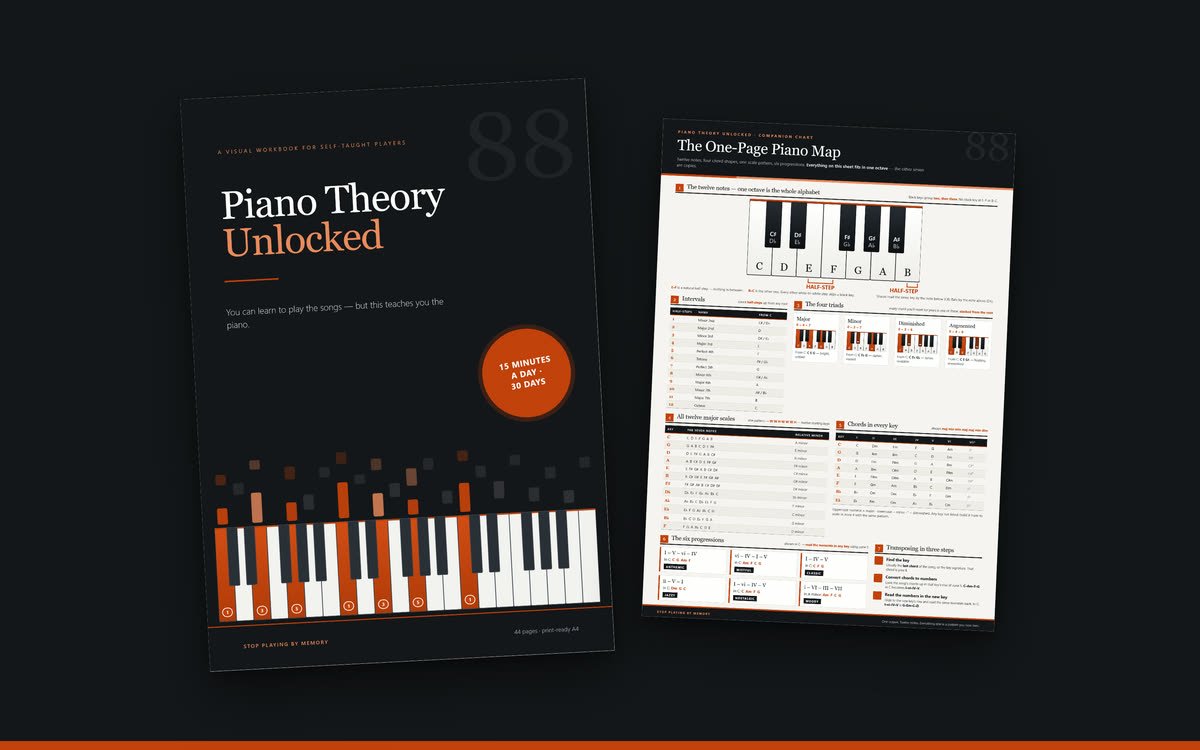
Not two hundred pages of everything — the handful of ideas that actually unlock the keyboard, then the cheat sheets you'll keep on the music stand.
Learn the patterns underneath every song, so song ten stops costing as much effort as song one.
Twelve notes, one repeating shape. Every diagram is a real keyboard you put your hands on.
Transpose on the spot, work a song out by ear, and improvise eight bars that sound deliberate.
A 30-day plan that fits around a life — not a course you'll abandon in week two.
You know where your fingers go in the pieces you've learned. Move one note outside them and there's nothing to work from.
Black keys come in twos and threes, and the group never moves. Find it once and you can name any key on the instrument — then the scales, chords and progressions sit on top of it.
Every idea shows up as a shape on a real keyboard before it ever gets a name. You see it, you play it, and only then does the page explain what just happened under your fingers. No walls of text, no sheet music to decode — just clear, visual diagrams you can copy straight onto the keys in front of you.
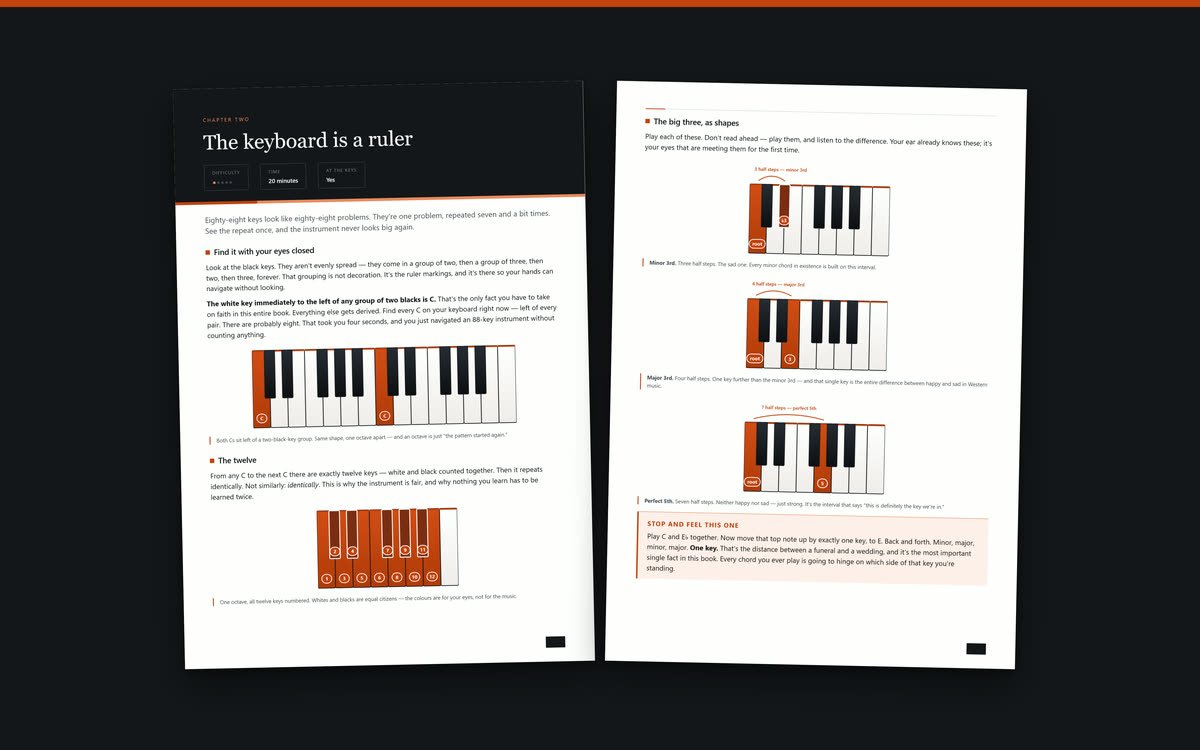
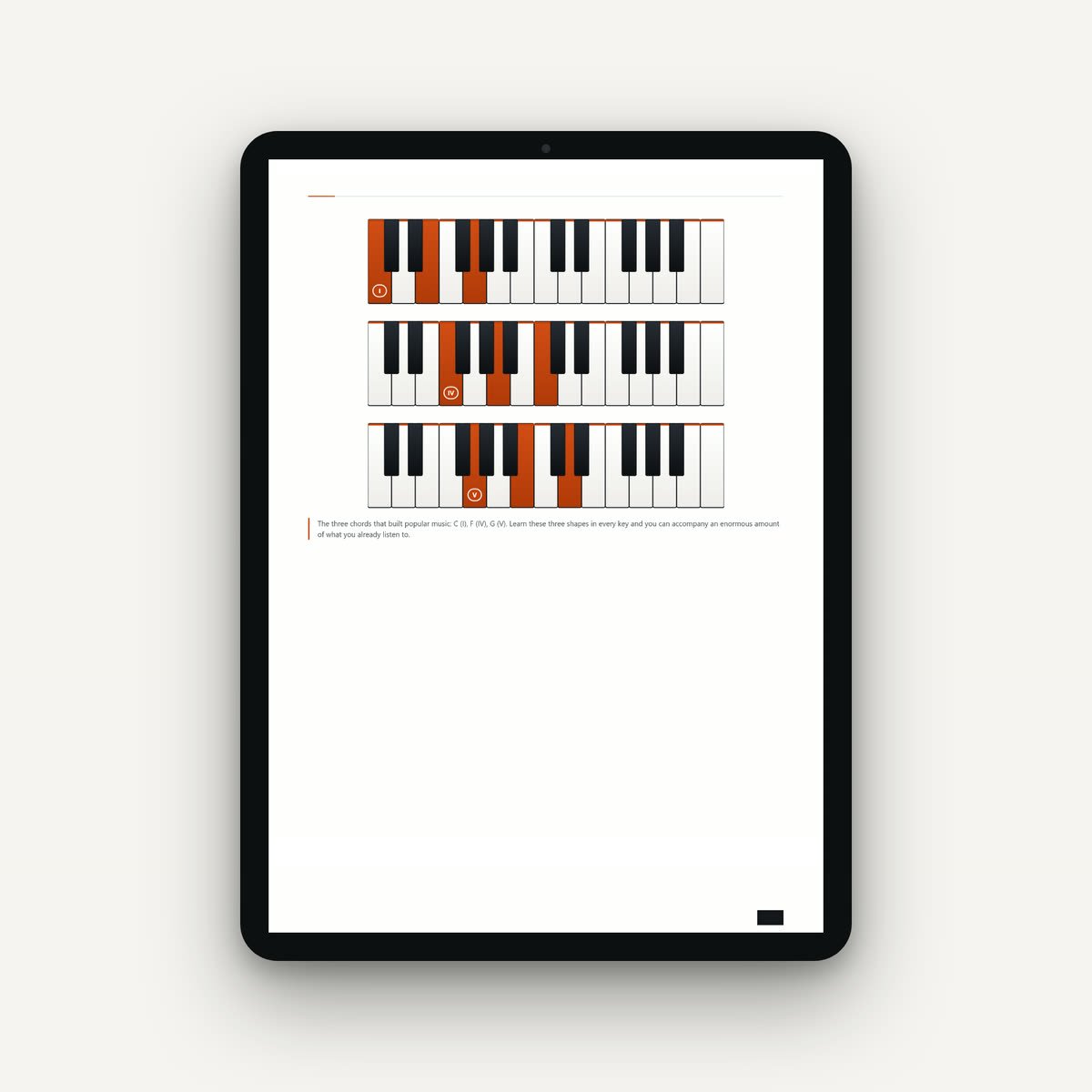 Reads beautifully on a tablet at the keys — or printed and marked up with a pencil.
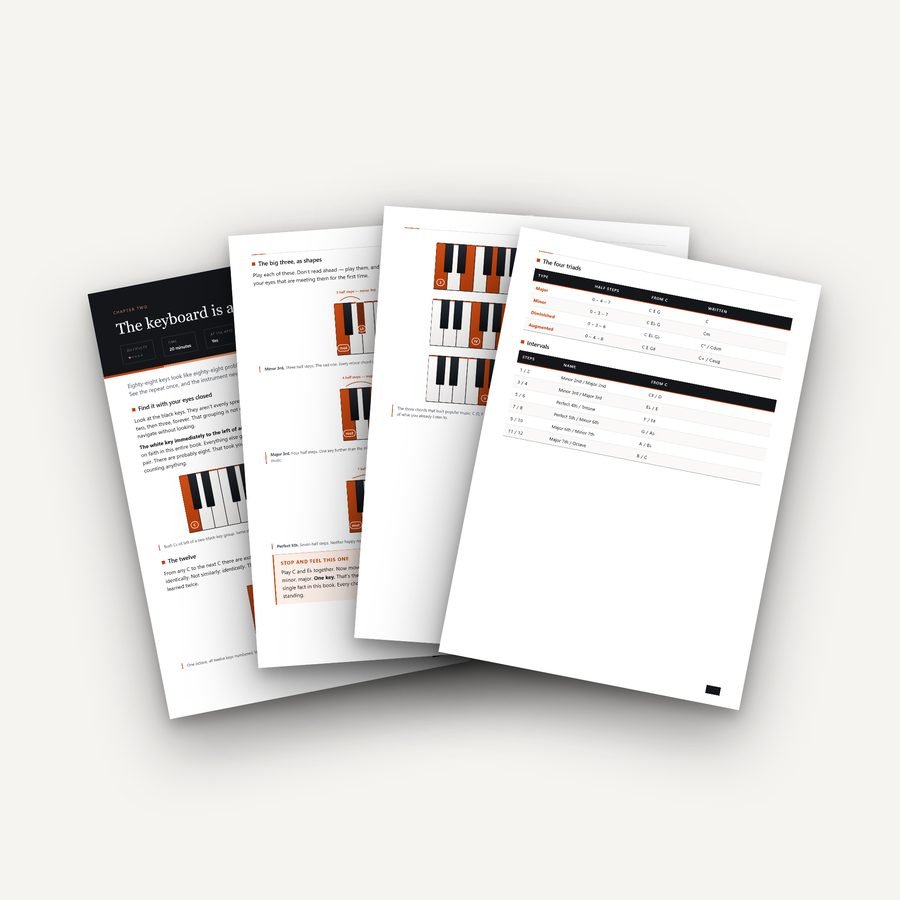
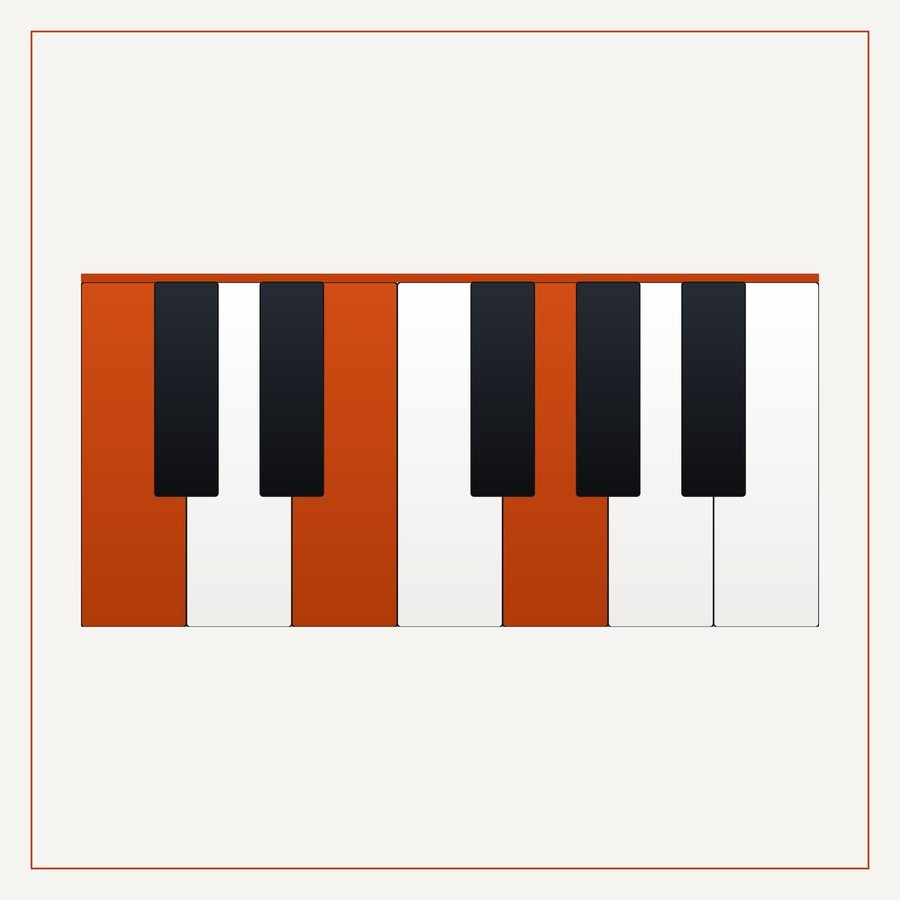
A glimpse, not the whole book — the other 42 pages are the part you're buying.
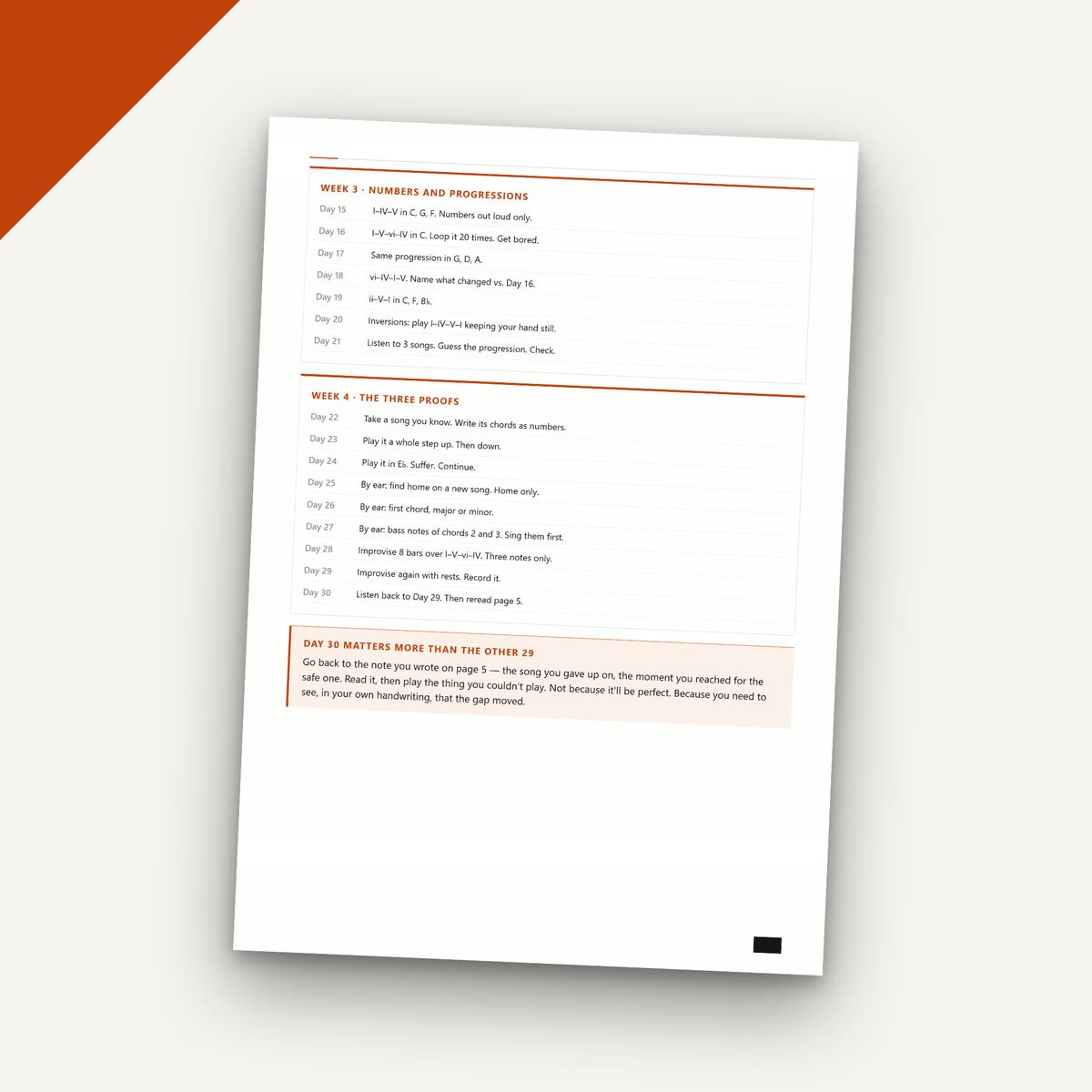
Six pages from the book, unedited. Click through and read them properly — this is the whole method, not a mock-up.
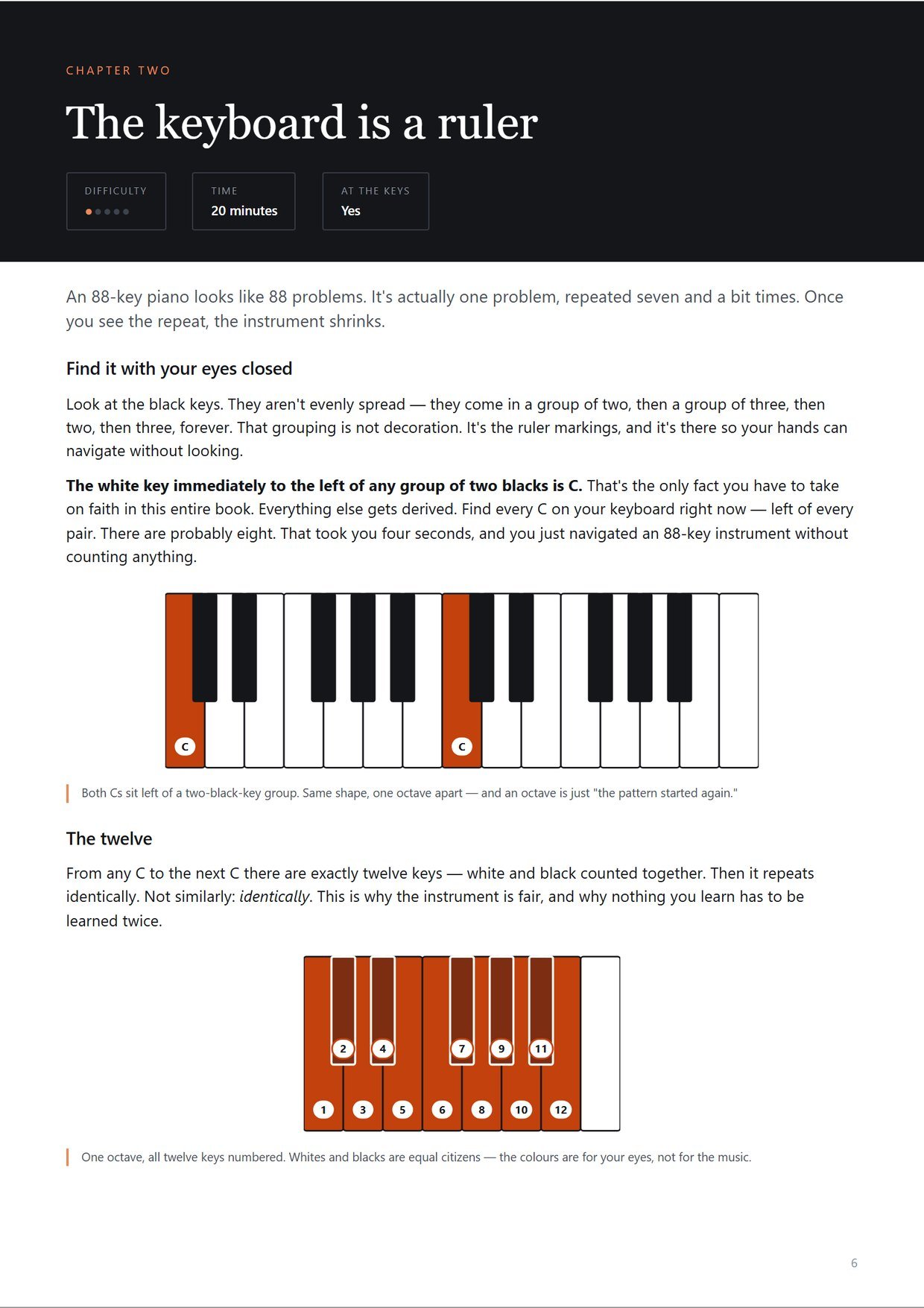
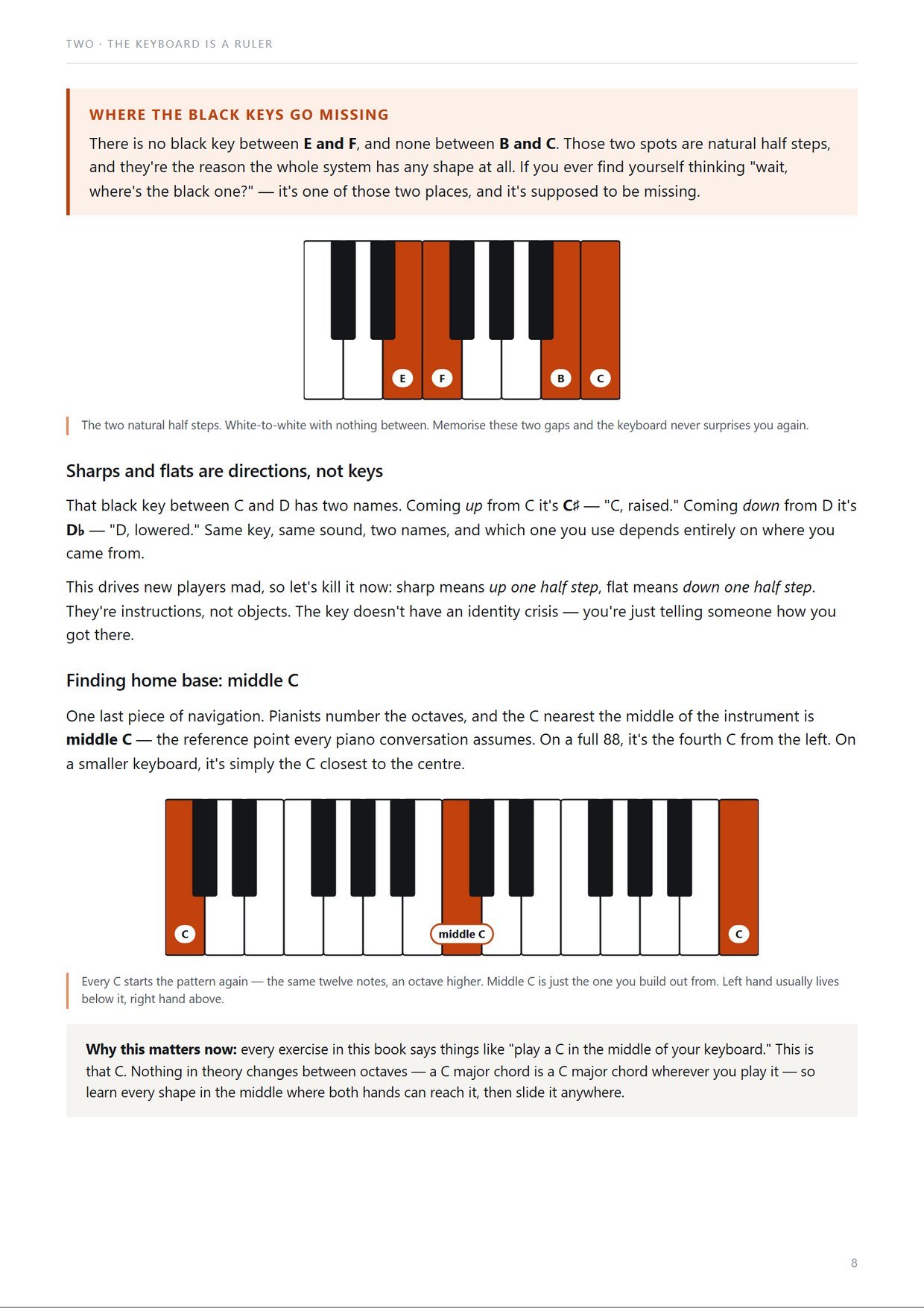
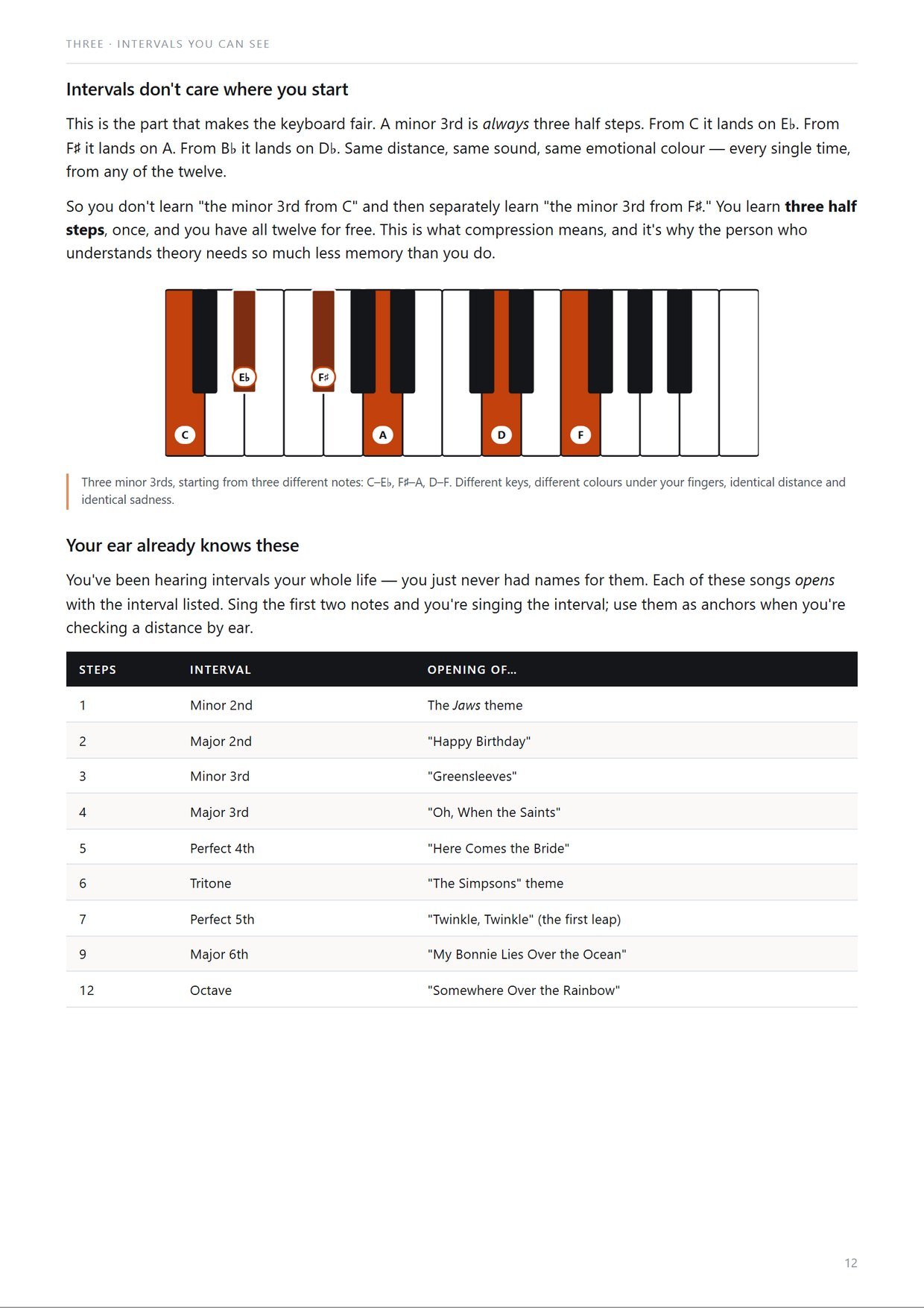
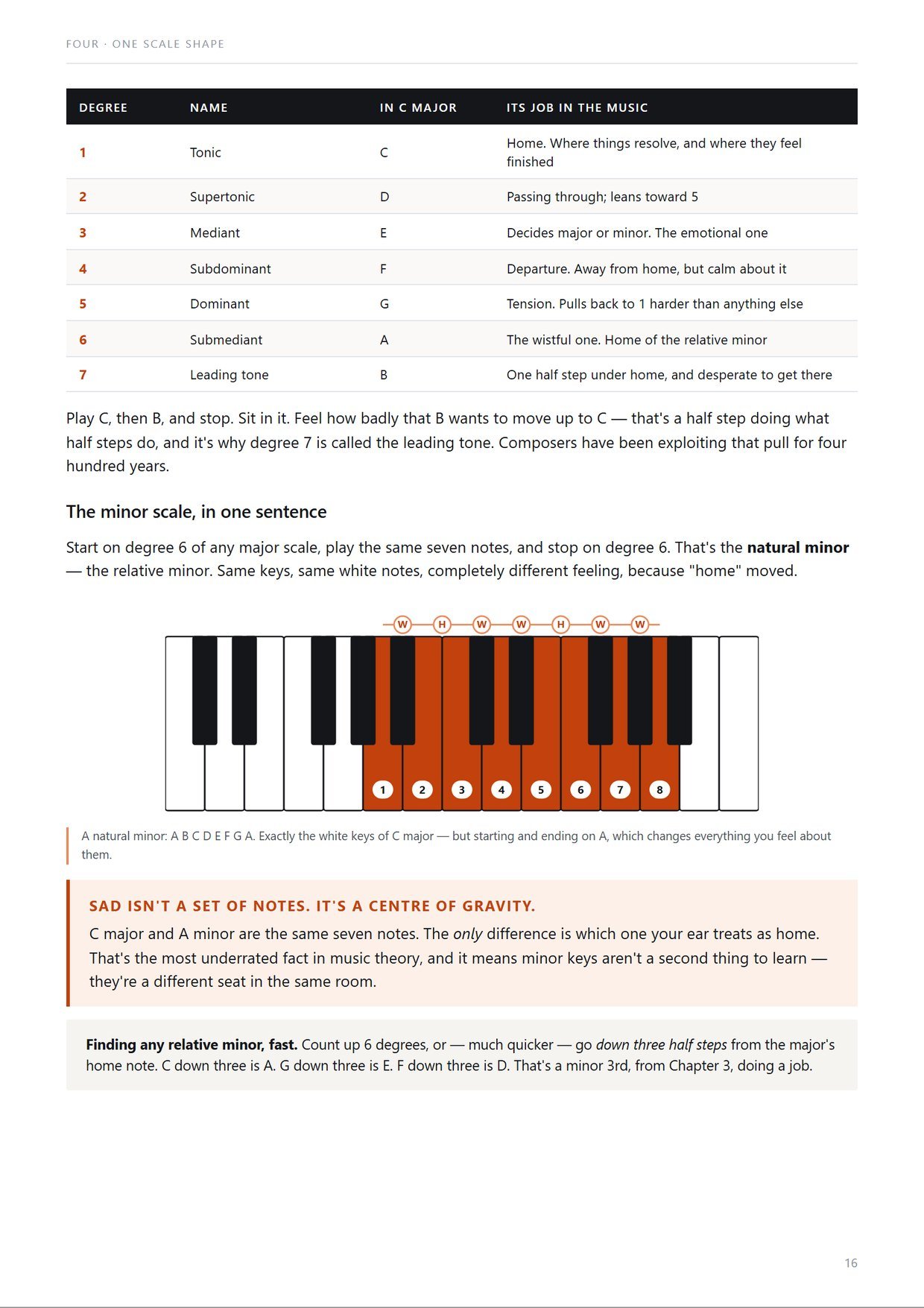
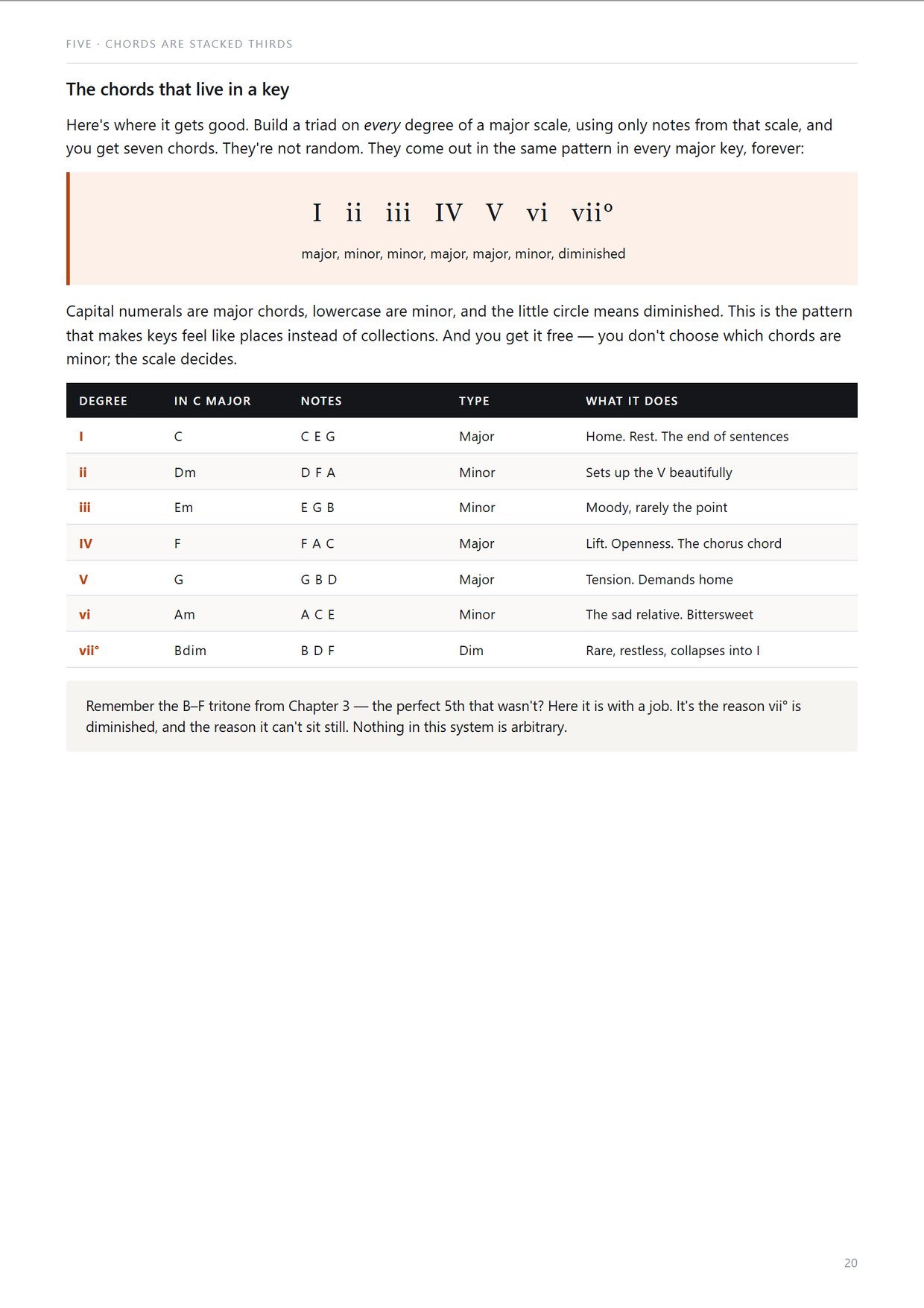
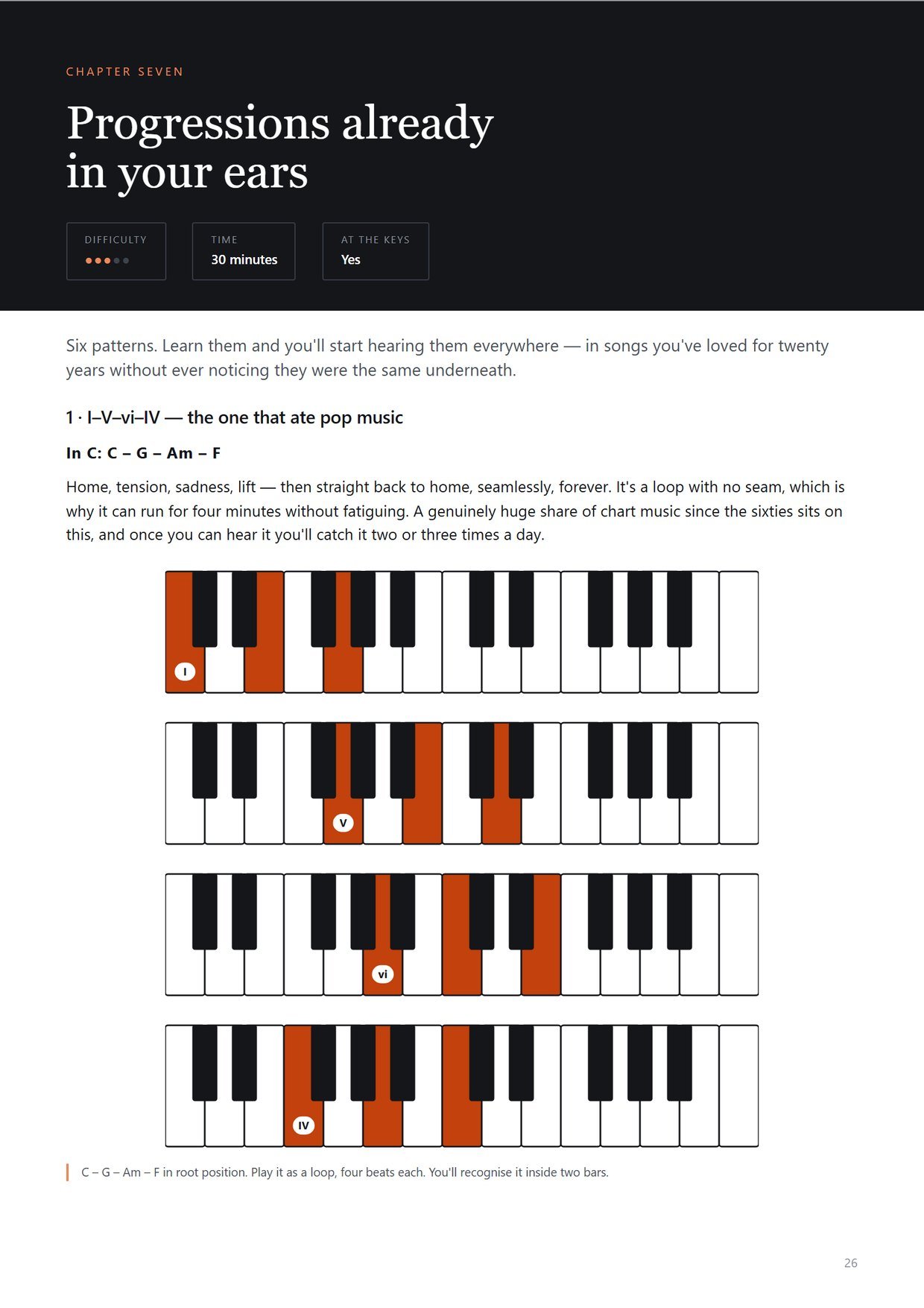 Click to zoom
Six of forty-five. The rest is the part you're buying.
Ten lessons, each built from the one before it, then three reference sections you'll keep using long after you've read the rest.
Why tutorial-learning stops working, and what replaces it
Twelve notes, one repeating pattern, no memorising
Distance as shape, not vocabulary
The formula that unlocks every key
Major, minor, diminished, augmented — built, not memorised
Why musicians say "one five six four"
Six patterns behind an enormous amount of music
The moment the theory proves itself
Bass note, then quality, then the rest
The smallest version that actually sounds like music
Fifteen minutes a day, in order
All twelve keys, every triad shape, the progression map
Print these. Write on them.
Work through it in order — every chapter is built from the one before it. The exercises are the point; the prose is just the setup.
The 45-page PDF lands in your inbox the second you order.
Every lesson shows a shape before it names it. Hands on first, then read why.
By day 30 you can move a song to any key, find one by ear, and improvise without freezing.
I taught myself piano. For years I could sit down and play pieces I'd learned, and they sounded genuinely good — right up until someone asked me to play one a bit lower, or just to play something. Then nothing. I had a collection of songs and no idea what any of them were made of.
Every book I picked up assumed I could already read music, or opened with a wall of text about circles of fifths that never once told me where to put my hands. What finally worked was seeing the shapes on the keys first and reading the theory afterwards — which is the whole method in this workbook, in the order that actually made it click.
If you can play the songs but not the piano, this is the book I wish I'd had at year one.
The book teaches the structure. The poster keeps it in front of you while you practise.
45 pages from "I only play what I've memorised" to transposing on the spot, working songs out by ear, and improvising eight bars. Ten lessons, a 30-day plan, and cheat sheets.
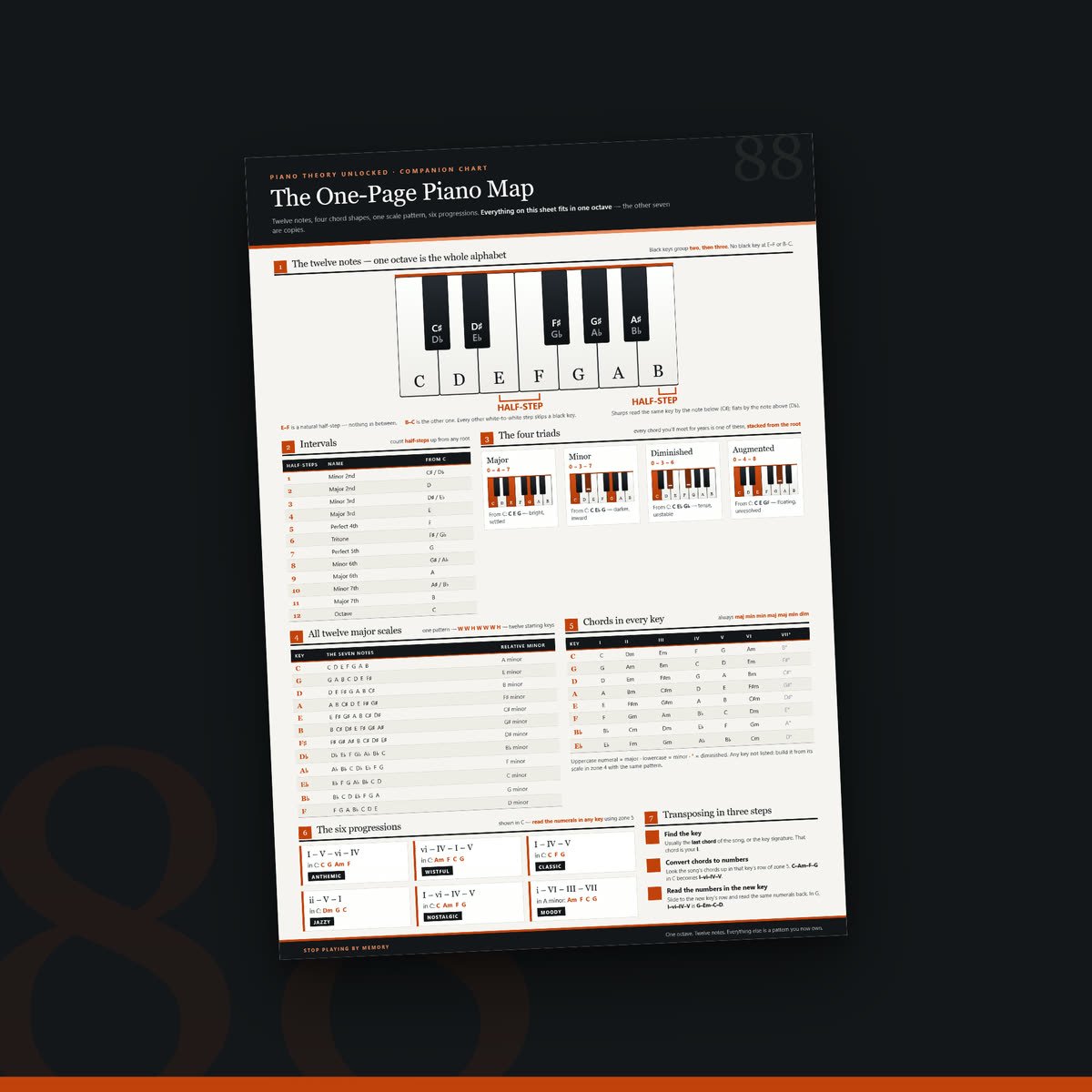
Every scale, chord and progression from the book on one printable A2 sheet. Tape it above the keyboard and the map is there every time you sit down — no page-flipping.
One of the better under-$30 gifts for anyone who plays a bit but wishes they understood it — instant delivery means you can gift it the same day.
 Curious Digital Things